
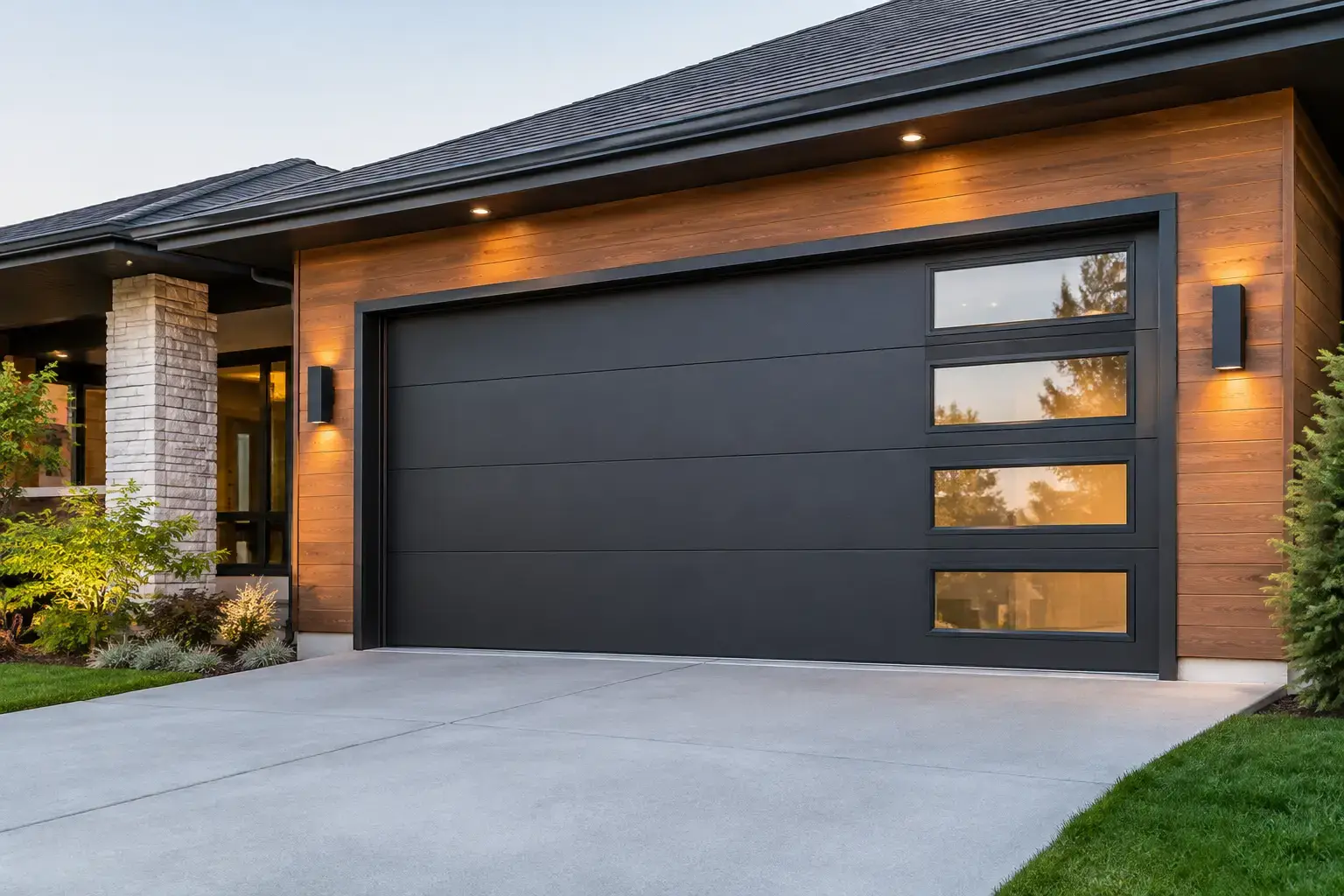
A garage door can occupy a third or more of a home’s front exterior. When it is dented, noisy, poorly insulated, or stuck in a dated style, it affects more than curb appeal. The right modern garage door designs can make the home look sharper, keep the garage more comfortable, and provide reliable daily access for vehicles, storage, and family routines.
For homeowners in Metro Vancouver and the Lower Mainland, the best-looking door is not always the best choice. Rain, temperature changes, street exposure, parking habits, and the condition of the existing opening all matter. A new door should suit the house, but it also needs the right hardware, weather protection, opener setup, and professional installation to work safely for years.
What Defines Modern Garage Door Designs?
Modern design is not limited to a flat black door with glass panels. Clean lines are part of the look, but true contemporary doors are defined by proportion, material, finish, and restraint. They usually have fewer decorative details than traditional raised-panel doors, allowing the architecture of the home to take center stage.
A modern door may use wide horizontal sections, flush panels, narrow windows, aluminum framing, full-view glass, natural wood tones, or a single confident color. On a newer home, this can create a crisp, intentional façade. On an older home, a contemporary door can update the exterior without requiring a complete renovation.
The key is choosing a design that belongs on the house. A full-view aluminum and glass door can look excellent on a modern renovation with large windows and clean siding. The same door may feel out of place on a heavily detailed heritage-style home, where a contemporary wood-look sectional door might offer a better balance.
Start With the Home, Not the Door Catalog
The fastest way to make a garage door look expensive is to match its visual weight to the home. Consider the roofline, front entry door, window frames, exterior cladding, and the amount of garage visible from the street. A door should support those elements rather than compete with them.
Dark charcoal, black, bronze, and slate gray finishes are popular because they frame an opening clearly and pair well with white, wood, stone, and light-gray exteriors. They do, however, show dust, road grime, and scratches more readily than lighter colors. If the garage faces strong afternoon sun, a very dark finish can also absorb more heat.
Wood-look finishes bring warmth to contemporary homes without the maintenance demands of natural wood. They work particularly well with cedar accents, stone, and neutral siding. Actual wood doors provide a distinctive appearance, but they need regular finishing and careful moisture management. In a wet coastal climate, that commitment should be part of the buying decision, not an afterthought.
Material Choices: Appearance Meets Daily Use
The material affects the door’s appearance, durability, maintenance needs, and insulation performance. There is no single right answer because usage matters. A detached garage used mainly for parking has different needs than an attached garage beside a bedroom, home office, or finished living space.
Steel Doors: Practical and Versatile
Insulated steel remains one of the strongest choices for homeowners who want modern styling without fragile or high-maintenance materials. It is available in flush panels, smooth finishes, wood-grain textures, and contemporary colors. Quality steel doors can also be fitted with insulation that helps reduce heat transfer and street noise.
Look beyond the front face. Door thickness, insulation type, backing, hinges, rollers, tracks, and bottom seals affect how the system performs. A low-cost door with light-duty hardware may look fine on installation day but become loud or unreliable under frequent use.
Aluminum and Glass: Light, Clean, and Architectural
Aluminum-framed glass doors are a defining option in many modern garage door designs. They bring daylight into the garage and create a strong connection between indoor and outdoor space. Frosted, tinted, obscure, or mirrored glass can provide privacy while keeping the clean full-view style.
The trade-off is visibility and thermal performance. Clear glass can expose tools and stored items, while large glazed areas generally insulate differently than a well-insulated steel door. For an attached garage, discuss insulated glass and framing options before choosing a full-view model.
Wood and Wood-Look Doors: Warmth With Different Commitments
Natural wood has depth and character that printed finishes cannot fully duplicate. It can be ideal for a custom home or an exterior where the garage door is intended to be a focal point. It also requires ongoing care, including inspection for moisture effects, fading, and finish wear.
Wood-look steel or composite doors offer a more practical route for many busy households. They can deliver the horizontal plank appearance of wood while standing up better to daily operation and reducing routine upkeep. The quality of the finish matters, so viewing a sample in natural light is worthwhile.
Windows Should Serve a Purpose
Garage door windows do more than decorate the top section. They affect light, privacy, symmetry, and the overall scale of the door. Long narrow panes can emphasize a horizontal contemporary profile, while a full row of glass can visually connect the garage to the home’s other windows.
Place windows where they make sense for the interior. If the garage is used as a workshop, daylight may be valuable. If the garage faces a busy street and stores equipment, obscure or tinted glass may be the better choice. Windows also add weight, so the torsion spring system must be correctly sized for the finished door. This is not a detail to leave to guesswork.
Insulation and Weather Sealing Are Part of the Design
A sleek new garage door that leaks cold air, rain, or debris around the edges is not a complete upgrade. Insulation is especially worth considering when the garage is attached to the home, when there is living space above it, or when the door is exposed to wind and rain.
The door’s R-value provides a starting point, but the complete system matters more. Proper perimeter weatherstripping, a flexible bottom seal, correctly adjusted tracks, and a level floor all contribute to real-world performance. A door can have good insulation on paper and still feel drafty if the opening has gaps or the seal does not meet the concrete evenly.
During installation, the condition of the jambs, header, framing, and existing tracks should be checked. A professional site review before ordering helps prevent surprises such as inadequate headroom, uneven openings, or an opener that is not suitable for the new door’s size and weight.
Do Not Treat Hardware as an Add-On
The door panels receive attention because they are visible. The springs, rollers, cables, hinges, bearings, tracks, and opener determine whether the door opens quietly and safely every day. A modern door on worn hardware is still a problem waiting to happen.
For a smooth, quieter result, ask about heavy-duty torsion springs, nylon or polyurethane rollers with bearings, properly matched cables, and a reinforced top section where the opener arm connects. These parts take the load of repeated operation. They also help reduce vibration that can make a new installation feel cheap or noisy.
If the door includes glass, insulation, or custom cladding, its weight may be substantially different from the old door. Springs must be calibrated to the actual door, not selected based on a rough estimate. Incorrect spring tension can make an opener strain, cause uneven movement, or create a serious safety risk.
Pair the Door With the Right Opener
A new garage door is a good time to assess the opener. An aging chain-drive unit may continue to operate, but it can be louder than homeowners expect once a quiet new door is installed. Belt-drive openers are often a strong choice for attached garages because they reduce operational noise.
The opener should include properly aligned safety photo eyes and a reversing system that is tested after installation. Features such as battery backup, keypad entry, smartphone control, and integrated lighting can be useful, but they should not distract from the basics: correct force settings, a balanced door, reliable wiring, and safety sensors that work every time.
Installation Details Protect the Investment
Garage doors are heavy moving systems under spring tension. A door that is off track, poorly balanced, or fitted with mismatched components can damage panels, overload an opener, and put people or vehicles at risk. Professional installation is not simply about getting the door into the opening. It includes setting the tracks, balancing the springs, testing the safety systems, sealing the perimeter, and confirming that the door operates correctly through its full travel.
Garage Door Ninja approaches new installations with the same complete-service mindset used for repairs: inspect the opening, match the hardware to the door, and test the finished system rather than stopping once it moves. That attention helps homeowners avoid the common problem of a beautiful door that performs poorly within a season.
Before choosing from photos alone, stand at the curb and look at the lines already present in your home. Then choose the door that supports those lines, fits how you use the garage, and has the insulation and hardware to handle daily life. The best modern design is the one that still looks right and works quietly after thousands of open-and-close cycles.