That sharp squeak when the garage door opens is often more than an annoyance. Dry hinges create friction every time the door moves, placing extra strain on the hinge joints, rollers, opener, and other working hardware. Knowing how to lubricate garage hinges correctly can quiet the door and help you catch worn parts before they turn into a same-day repair problem.
For most sectional residential doors, this is a simple maintenance task. The key is using the right lubricant in the right place, keeping it off the track, and stopping when you see damage that lubrication cannot solve.
What Garage Door Hinges Actually Need
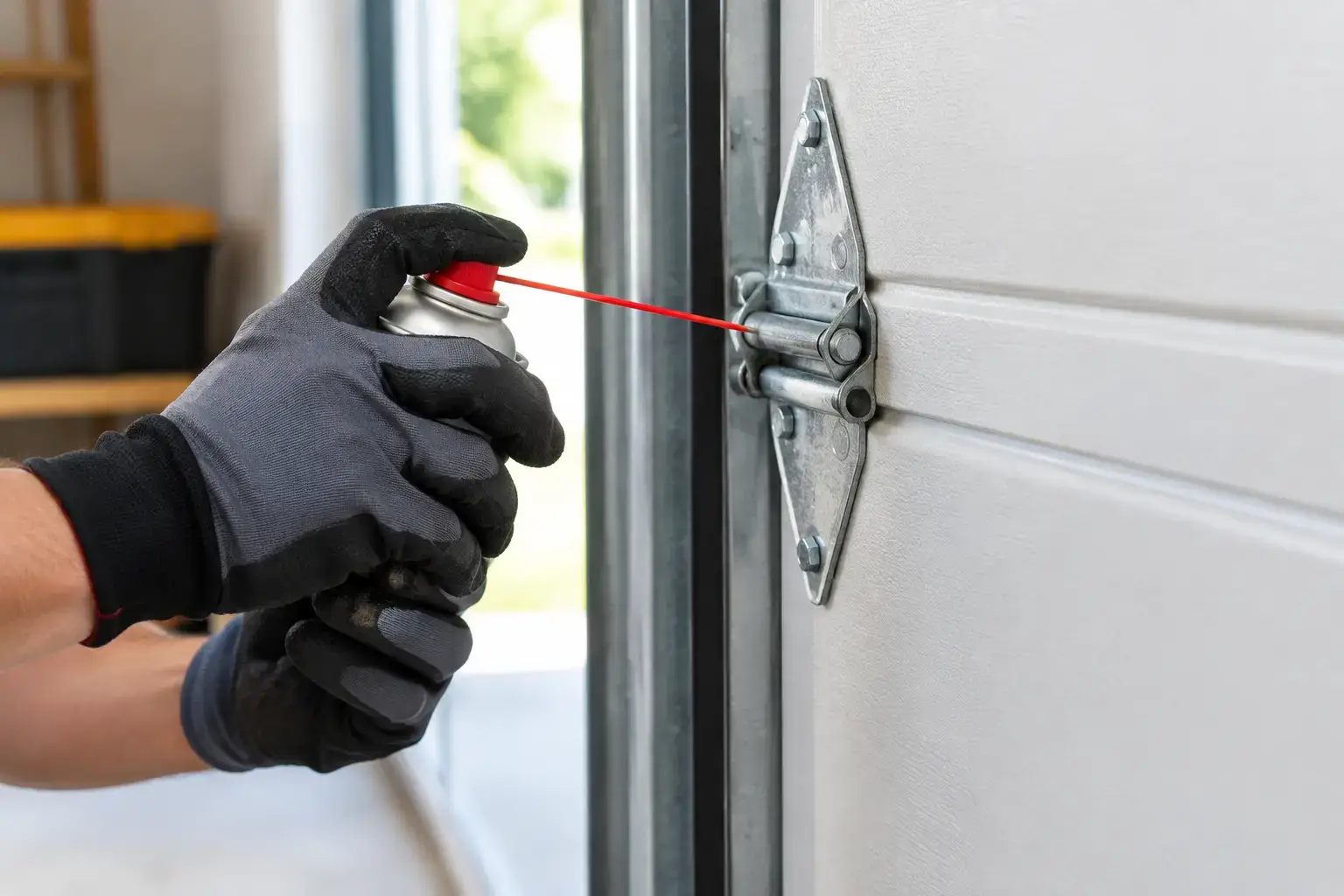
Garage door hinges connect the door sections and allow each panel to bend as it travels along the curve of the track. On a sectional door, each hinge has a pivot point or barrel where the metal parts move against one another. That pivot point is where lubricant belongs.
Use a garage-door-specific spray lubricant, white lithium grease, or a silicone-based garage door lubricant. These products are made to stay on moving metal parts without becoming excessively sticky. In damp weather, a quality lubricant also helps protect exposed hinge hardware from surface corrosion.
Avoid coating the hinges with heavy multipurpose grease. It can collect dust, road grit, pet hair, and garage debris, eventually creating a paste that makes movement worse. Standard penetrating sprays can be useful for loosening a lightly rusted fastener, but they are usually not the best long-term lubricant for garage door hardware because they do not last as long under repeated movement.
You will need a spray lubricant with a narrow straw attachment, a clean rag, and a step stool if the upper hinges are out of reach. Safety glasses are a smart addition, especially when spraying overhead.
How to Lubricate Garage Hinges Safely
Start with the garage door fully closed. A closed door keeps the hinges in a stable position and limits the chance of fingers getting caught between panels. If you are working near the opener or plan to inspect additional hardware, unplug the opener or switch off power at the outlet so nobody can activate the door while you are working.
Do not loosen hinge bolts, remove hinge pins, or take apart any component connected to the torsion springs, cables, or bottom brackets. Garage door springs and cables carry extreme tension. Hinge lubrication is a homeowner-friendly maintenance job; spring and cable work is not.
1. Inspect each hinge before spraying
Walk along the inside of the closed door and look at every hinge, from the bottom section to the top. Check for cracked metal, loose screws, bent hinge leaves, enlarged screw holes, or rust that has eaten into the hinge. A hinge that is visibly damaged should be replaced, not lubricated and ignored.
Also look for black metal dust, unusual scraping marks, or a roller stem that appears to be rubbing against the hinge. These are signs that the door may be out of alignment, the roller may be worn, or the track may need professional adjustment.
2. Wipe away loose dirt and old buildup
Use a dry rag to remove dust, cobwebs, and old grease around the hinge barrel. You do not need to make the hinge spotless. The goal is simply to prevent new lubricant from mixing with dirt.
If the hinge is heavily rusted, spray a small amount of lubricant onto the pivot point, wait a few minutes, and wipe away the loosened residue. Do not soak the entire door panel or spray lubricant onto painted surfaces, insulation, or weatherstripping.
3. Apply a short spray to the pivot point
Place the straw near the moving barrel of the hinge and apply a brief, controlled spray. One or two seconds is usually enough. You are lubricating the point where the hinge folds, not coating the entire piece of hardware.
Use the rag immediately to catch drips and wipe away overspray. Excess lubricant does not make the door run better. It creates a mess and gives dirt something to stick to.
Repeat the process for each hinge. Pay close attention to the center hinges and the end hinges that also support rollers, since these see frequent movement every time the door opens or closes.
4. Cycle the door and listen closely
Restore power if you disconnected the opener, then run the door through two or three full cycles. Stand back and listen. The movement should sound smoother, but lubrication will not fix a grinding roller, a loose track, a failing opener gear, or a door that is binding.
After cycling the door, inspect the hinges again. Wipe off any lubricant that has run onto the door sections or floor. A thin film at the pivot is enough.
Do Not Lubricate the Garage Door Tracks
This is one of the most common maintenance mistakes. Garage door tracks should generally remain clean and dry. Spraying lubricant inside the tracks can cause rollers to slide instead of roll, attracting grime and interfering with smooth travel.
Instead, wipe the inside of the vertical and horizontal tracks with a clean cloth. If you see a bent track, loose mounting bracket, or gap between the rollers and track, do not force the door or try to bend the track back with a hammer. Those problems can cause a door to come off track, especially when the door is heavy or the opener keeps pulling against resistance.
The rollers themselves may need lubrication, but it depends on the roller type. Steel rollers without sealed bearings can benefit from a small amount of lubricant at the bearing area. Nylon rollers with sealed bearings should not be saturated. If you are unsure which type you have, inspect them during a professional tune-up rather than guessing.
Other Parts Worth Checking While You Are There
A quiet hinge does not guarantee a healthy garage door. Since you already have the door closed and the hardware visible, take a few minutes to inspect the rest of the system without touching high-tension parts.
Look at the lift cables for fraying, rust, or loose strands. Check that the bottom brackets are secure, but never adjust them. Examine the weather seal along the bottom of the door for cracks, flattening, or gaps that let in water, cold air, and pests. Test the opener’s photo eyes by making sure both sensors are clean, aimed at each other, and showing their normal indicator lights.
You can also watch the door as it moves. It should travel evenly without jerking, shaking, or stopping unexpectedly. If one side rises faster than the other, the door slams shut, the opener strains, or the door will not stay balanced when operated manually, stop using it and schedule service. Those symptoms can point to spring, cable, roller, or track issues that lubrication cannot correct.
How Often Should You Lubricate Garage Hinges?
For a typical residential garage door, lubricating hinges about twice a year is a practical schedule. Many homeowners do it once in the spring and once before colder, wetter weather arrives. Homes near busy roads, construction areas, or coastal moisture may need more frequent cleaning because airborne grit and damp conditions can build up faster.
The schedule also depends on use. A door that opens four or five times each day puts more cycles on its hinges than a door used only on weekends. If the door starts squeaking again shortly after lubrication, do not keep adding more product. Inspect for loose hardware, worn rollers, hinge damage, or an alignment issue.
When a Squeak Needs a Professional Repair
Lubrication is preventive maintenance, not a cure for every noisy door. Call for service if the hinge is cracked or bent, screws will not stay tight, rollers wobble, the door shakes during travel, or you hear a loud bang from the spring area. A door that is off track, uneven, or difficult to lift manually should be treated as a safety concern.
Garage Door Ninja technicians inspect the full operating system, not just the noisy part. That means checking hinges, rollers, tracks, cables, springs, opener function, safety sensors, and door balance so a minor squeak does not hide a larger problem.
A few careful sprays at the hinge pivots can keep a healthy door quieter and moving more freely. If the noise remains or the door does not move smoothly, let the symptom guide you: clean lubrication helps, but a complete inspection protects your door, vehicle, and family.